

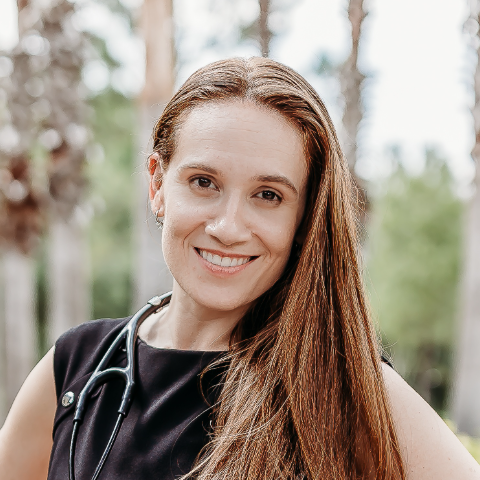

Heavy menstrual bleeding — known medically as menorrhagia — is far more than an inconvenience. For many women it disrupts daily life and can signal an underlying condition. As many as 1 in 5 women experience it, yet many endure it quietly, assuming it’s simply normal.
If you’re planning your life around your period, that’s a red flag.
— Dr. Christina Gomez
What is menorrhagia?
Menorrhagia is menstrual bleeding that’s abnormally heavy or prolonged. Flow varies from woman to woman, but the common signs include:
- Bleeding that lasts more than seven days
- Soaking through a pad or tampon every hour
- Passing large blood clots
- Needing to change protection overnight
- Signs of anemia, such as fatigue or dizziness
What causes it
- Hormonal imbalances, including thyroid conditions or PMOS (formerly PCOS)
- Uterine fibroids or polyps
- Bleeding disorders, such as von Willebrand disease
- Adenomyosis, where the uterine lining grows into the muscle wall
- Certain medications, like blood thinners
Less commonly, heavy bleeding can be an early sign of endometrial or cervical cancer — another reason a proper evaluation matters.
How it’s diagnosed
We begin with your history and a physical exam, often followed by blood tests, a pelvic ultrasound, a Pap smear, and — when needed — an endometrial biopsy or hysteroscopy. Together these rule out structural causes and uncover hormonal or clotting issues.
Treatment options
Treatment depends on the cause, the severity, and whether you hope to have children.
- Medical options — hormonal birth control, hormonal IUDs, and tranexamic acid, a non-hormonal medication that reduces blood loss. Iron supplements can help treat anemia.
- Surgical options — from minimally invasive endometrial ablation to, in select cases, hysterectomy.
Hormonal IUDs are often a game-changer for patients. They’re effective and preserve fertility in many cases.
— Dr. Christina Gomez
- Bleeding lasts more than seven days
- You bleed between periods
- You feel severe fatigue or dizziness
- You pass clots larger than a quarter
Finding relief
Heavy periods take a real physical and emotional toll — but they don’t have to be endured. With proper evaluation and treatment, most women find significant relief. If you’re experiencing symptoms of menorrhagia, don’t wait. Schedule a consultation or call 813-733-7300.